
Varnishing wooden worktops may seem like an obvious way to create a tough, waterproof finish. However, a kitchen surface faces moisture, heat, scratches, cleaning and natural timber movement every day. Conventional varnish forms a surface film that can become difficult to repair once damaged. Technically, timber can be varnished, but varnishing wooden worktops is generally not the finish we recommend. A suitable worktop oil retains a more natural appearance and makes maintenance simpler. This matters for wooden kitchen worktops, which must withstand spills, food preparation and repeated cleaning.
Why Varnishing Wooden Worktops Can Cause Problems
Varnish protects timber by drying into a film over its surface. That film may initially look smooth and feel hard, but knives, pans, crockery and appliances can scratch or chip it. Direct heat may also mark or discolour the coating.
Timber expands and contracts slightly as temperature and humidity change, while cured varnish is comparatively rigid. When varnishing wooden worktops, this difference may contribute to fine cracks around joints, edges, sink cut-outs and exposed end grain. Once the coating is broken, water can pass through the damaged area and become trapped beneath the surrounding finish. This may cause cloudy patches, dark moisture marks or lifting that cannot simply be wiped away.
Varnish Vs Oil For Wooden Worktops
The comparison below explains why specialist oil is commonly preferred to varnishing wooden worktops.
| Consideration | Conventional Varnish | Specialist Worktop Oil |
|---|---|---|
| Protection | Forms a film over the surface of the timber. | Penetrates and cures within the upper wood fibres. |
| Appearance | Can create a glossy or noticeably coated appearance. | Enhances the natural grain while retaining the character of the timber. |
| Damage | Scratches, chips and cracks can break the protective surface film. | Worn areas can normally be lightly sanded and re-oiled. |
| Moisture | Water may become trapped beneath the finish if the varnish is damaged. | A properly maintained oil finish helps repel everyday spills and splashes. |
| Repair | Localised repairs may leave visible differences in thickness, colour or sheen. | Local maintenance is generally easier to blend into the surrounding surface. |
| Care | May require extensive sanding or stripping once the surface film begins to fail. | Requires periodic re-oiling according to the condition and level of use. |
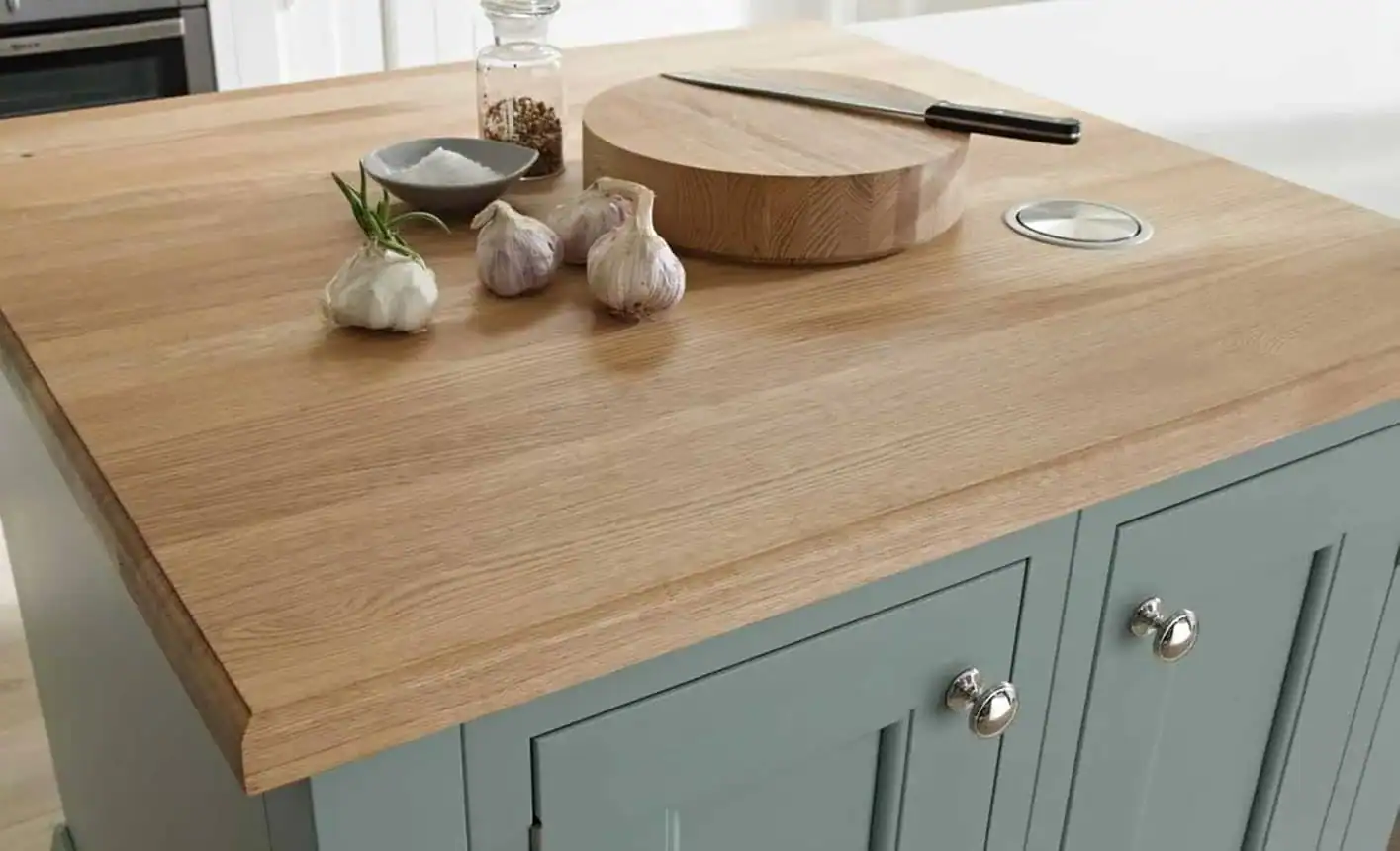
Oil is not maintenance-free, and no finish makes timber immune to standing water or hot cookware. Its advantage is renewability. Protection can be replenished when the surface looks dry or water stops beading.
Why Oil Is Better Than Varnishing Wooden Worktops
A specialist worktop oil soaks into the timber rather than enclosing it beneath a clear shell. Once correctly applied and cured, it helps resist moisture while emphasising the colour and grain that make solid wood worktops distinctive. Areas around the sink, kettle and main preparation zone often wear faster than quieter sections. An oiled finish can commonly be cleaned, lightly sanded and refreshed without stripping the whole surface. Repairing varnished wooden worktops usually requires a larger section to be taken back so the new coating does not leave a visible edge or mismatched sheen.
Oil can deepen the character of timbers such as oak worktops without creating the heavily sealed appearance associated with some varnishes. Always choose a product intended for kitchen worktops and follow its preparation, drying and curing instructions.
How To Protect Wooden Worktops Without Varnish
Before oiling, make sure the timber is smooth, clean and completely dry. Apply thin, even coats with the grain, allow the oil to penetrate for the stated time and remove any excess before it becomes sticky. Apply further coats only as directed by the manufacturer. Every exposed area needs protection, not only the top. Treat the underside, edges, end grain, joints and sink or hob openings. A professional worktop cutting service can prepare accurate cut-outs, but freshly exposed timber must still be treated after cutting and installation. Our guide to how to oil a worktop provides more detailed application advice.
After installation, wipe up liquids promptly, use chopping boards and place hot cookware on a trivet. Re-oil when the surface looks dry, feels rough or no longer beads water. These habits offer more manageable protection than varnishing wooden worktops and assuming the film will stay intact indefinitely.
Can You Remove Varnish From A Wooden Worktop?
Yes, but oil cannot penetrate an existing varnish layer. If varnishing wooden worktops has resulted in peeling, clouding or trapped moisture, the coating normally needs to be removed completely. This may involve careful sanding or a compatible stripping method, followed by finer sanding to return the worktop to bare timber.
Remove all dust and residue, allow the surface to dry fully and test the proposed oil in an inconspicuous area. Solid timber can often be restored effectively, although extensive damage or uncertainty about the original coating may justify professional help.
FAQs
Can You Varnish Wooden Kitchen Worktops?
You can apply varnish to timber, but varnishing wooden worktops is generally not recommended unless the manufacturer approves a complete finishing system. Varnish is usually harder to repair after scratching, cracking or moisture ingress than a renewable oil finish.
Why Is Oil Easier To Repair Than Varnish?
Oil does not rely on one continuous surface film. A worn section can often be cleaned, lightly sanded and re-oiled, whereas patched varnish may leave differences in colour, thickness or sheen.
Can I Apply Oil Over Varnish?
No. Varnish prevents oil from entering the wood fibres. Remove the film and return the surface to clean, bare timber before applying a suitable worktop oil.
How Often Should A Wooden Worktop Be Oiled?
There is no single interval for every kitchen. Re-oil according to use and surface condition. Dryness, roughness or water spreading rather than beading are useful signs that maintenance is due.
What If My Worktop Has Already Been Varnished?
Do not apply oil over it. If the finish is intact, identify the product and follow its instructions. If it is damaged or lifting, remove it fully, treat any stains and refinish the bare timber with a suitable system.
Choose A Finish That Can Be Maintained
Varnishing wooden worktops can look attractive at first, but everyday wear may break the surface film and make repairs complicated. Specialist worktop oil is generally more practical because it complements the timber and allows worn areas to be renewed. With thorough preparation and regular care, an oiled wooden worktop can remain protected, repairable and full of character for many years.