
FSC certification is often mentioned when buying timber products, but its meaning is not always clear. Understanding what those three letters stand for helps explain where wood comes from, how it is sourced and why it matters when choosing materials for your home.
What FSC Means and Why It Matters
FSC stands for the Forest Stewardship Council, an independent organisation that sets standards for responsible forest management. In simple terms, FSC certification confirms that the wood used in a product has been sourced in a way that protects forests, wildlife and the people who depend on them.
The system exists to address concerns around deforestation, illegal logging and unsustainable practices. By setting clear guidelines, FSC helps ensure that forests are managed responsibly, with long-term environmental balance in mind rather than short-term gain.
For consumers, this has both environmental and ethical significance. Choosing FSC-certified timber supports sustainable forestry, fair working conditions and responsible supply chains, all of which contribute to better long-term outcomes for both natural resources and the products made from them.
FSC Certification Explained for Wooden Products
FSC certification is not a single standard but a system with different categories that reflect how the wood has been sourced and processed.
The Different Types of FSC Certification
FSC certification appears in a few different forms, each indicating how the material has been sourced.
To begin with, ‘FSC 100%’ means the product is made entirely from timber sourced from responsibly managed forests that meet FSC standards. This is the most straightforward form of certification and offers full traceability back to certified forests.
Next, the term ‘FSC Mix’ refers to products made from a combination of FSC-certified timber, recycled materials and controlled sources. These controlled sources are assessed to ensure they meet acceptable environmental and ethical standards.
Finally, ‘FSC Recycled’ indicates that the product is made from reclaimed or recycled wood. This reduces the demand for newly harvested timber and supports a more circular use of resources.
What FSC Labels Mean in Practice
In everyday terms, FSC labels are usually found on packaging, product descriptions or certification markings. They provide a quick indication that the wood has been sourced responsibly, but the specific wording can vary depending on the certification type.
Understanding these labels helps when comparing products, particularly where sustainability is a consideration. While the label itself is simple, it reflects a wider chain of custody that tracks the material from forest to finished product, offering reassurance about its origin.
FSC Certification Explained for Wooden Kitchen Surfaces
When applied to kitchen design, responsible sourcing helps connect environmental considerations with the materials used in everyday surfaces.
Why FSC Matters for Wooden Kitchen Worktops
When it comes to wooden kitchen tops, FSC certification plays a role beyond sustainability alone. Worktops are a long-term investment, and responsibly sourced timber often reflects higher standards in material selection and supply.
Choosing FSC-certified surfaces means the wood has been harvested with care, which can contribute to consistency in quality and performance. It also provides reassurance that the materials used in the kitchen have been sourced in line with recognised environmental and ethical standards.
How FSC Applies to Different Wood Types
FSC certification applies across a wide range of woods, from lighter species to denser hardwoods. While each species has its own grain, durability and visual character, the certification focuses on how the timber is sourced rather than how it performs.
This means that regardless of the wood chosen, FSC certification helps ensure it originates from responsibly managed forests. For homeowners, this allows greater flexibility when selecting materials, knowing that sustainability considerations have been addressed at the sourcing stage.
Sourcing FSC-Certified Oak Wood
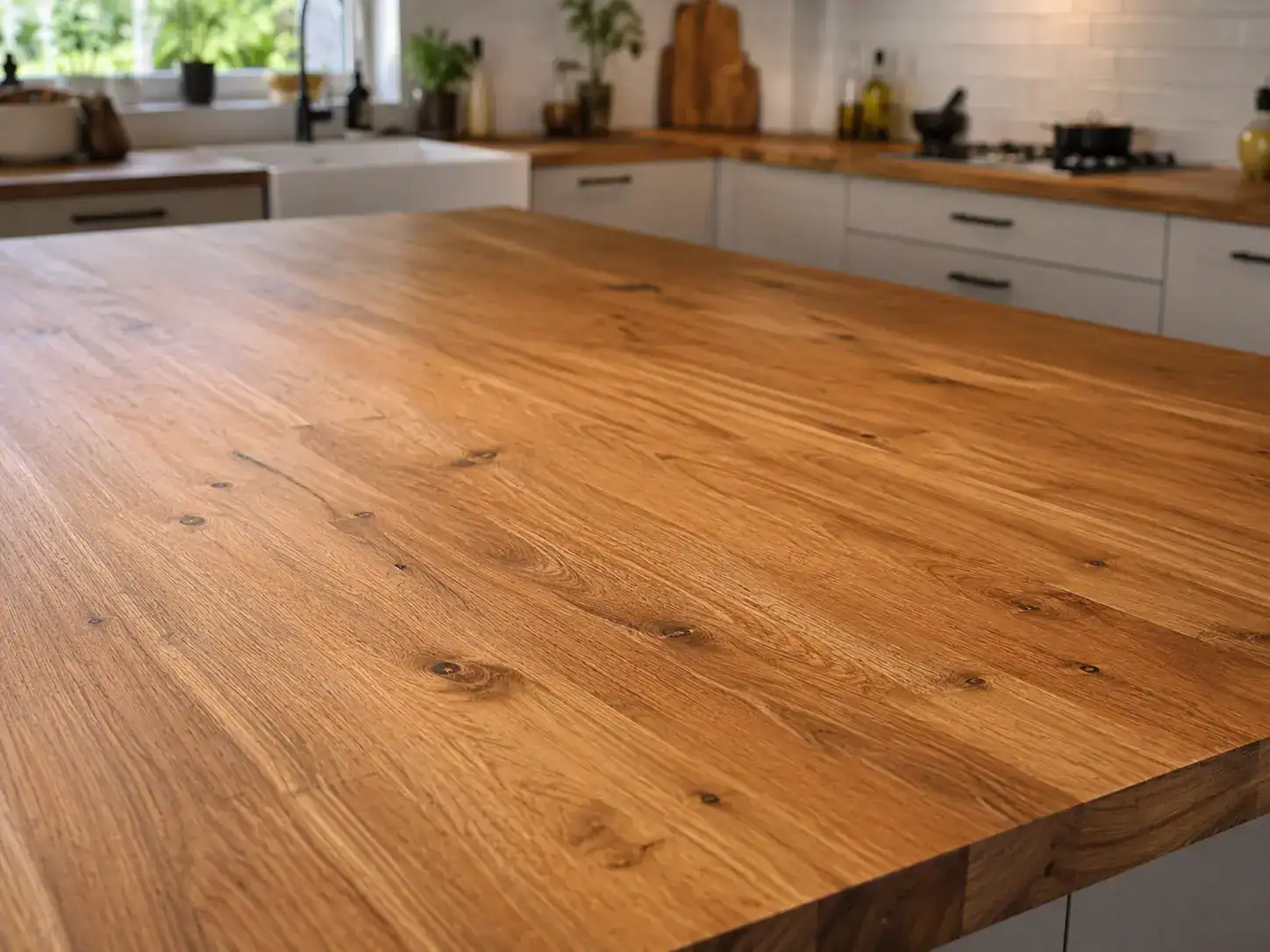
Among the most commonly used materials in kitchens, oak wood is often associated with both durability and traditional appeal. When FSC-certified, it offers the added assurance that its sourcing meets strict environmental and ethical standards.
For suppliers specialising in solid timber worktops, FSC-certified oak can form a key part of their offering. It allows customers to combine the practical benefits of a well-established material with confidence in how it has been produced, without compromising on quality or appearance.
Choosing FSC-Certified Worktops for Your Kitchen
Selecting responsibly sourced timber for your kitchen involves more than just material choice, as layout, size and installation details all influence how well the worktop performs in practice.
Matching Certification with Worktop Size and Layout
Worktop dimensions play a key role in both appearance and functionality throughout UK kitchens. Larger surfaces, such as 4m worktops in the UK, require consistency in grain and finish, which makes carefully sourced timber particularly important. In more compact British homes, slimmer options like 22mm worktops in the UK can create a lighter, more contemporary look, while a thicker 40mm worktop offers a stronger visual presence and added durability.
Choosing the right size and thickness alongside responsibly sourced timber helps ensure the finished surface not only fits the space but also performs reliably over time.
Considering Installation Details
Installation details should also be considered when selecting timber surfaces. Features such as wood upstands help protect walls from moisture and create a neat transition between the worktop and surrounding surfaces, particularly in areas exposed to regular splashing or cleaning.
Taking these elements into account at the selection stage allows for a more cohesive finish, while supporting the long-term durability of the installation and helping maintain the overall appearance of the kitchen over time.
Is FSC-Certified Timber Right for Your Kitchen?
Choosing responsibly sourced timber is not only about environmental considerations but also about long-term value. Well-managed forests often produce higher-quality material, which can translate into more consistent performance in the kitchen. Whether selecting between different timber options or opting for a reliable hardwood, careful sourcing supports both durability and appearance over time.
Conclusion
Understanding what these standards represent helps you make more informed decisions when selecting timber for your kitchen, particularly when considering FSC certification. By combining responsible sourcing with the right material, size and installation choices available from Wood Worktops, it is possible to achieve a finish that is both practical and built to last.